How I Learned to Fly Fish One of the World’s Rarest Trout
In the heart of northern New Mexico’s high country, a historic restoration project has brought one of North America's rarest fish back from the brink. Follow along as Nina Boys explores the sprawling wilderness of Vermejo to experience the thrill of fly fishing for the native Rio Grande cutthroat and discovers how luxury eco-tourism is fueling vital conservation efforts.
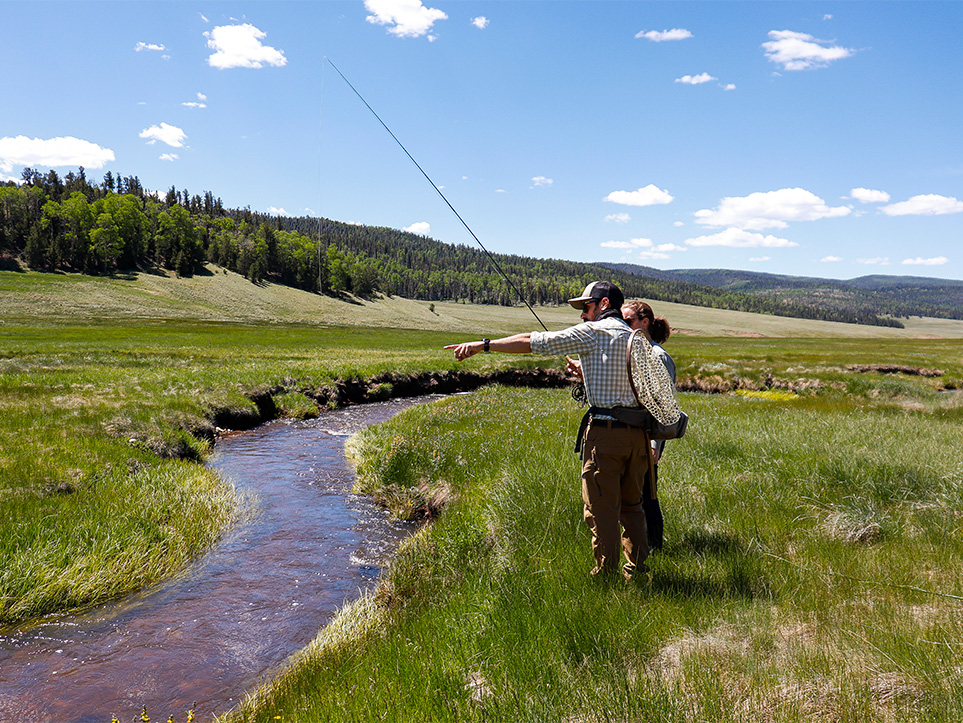
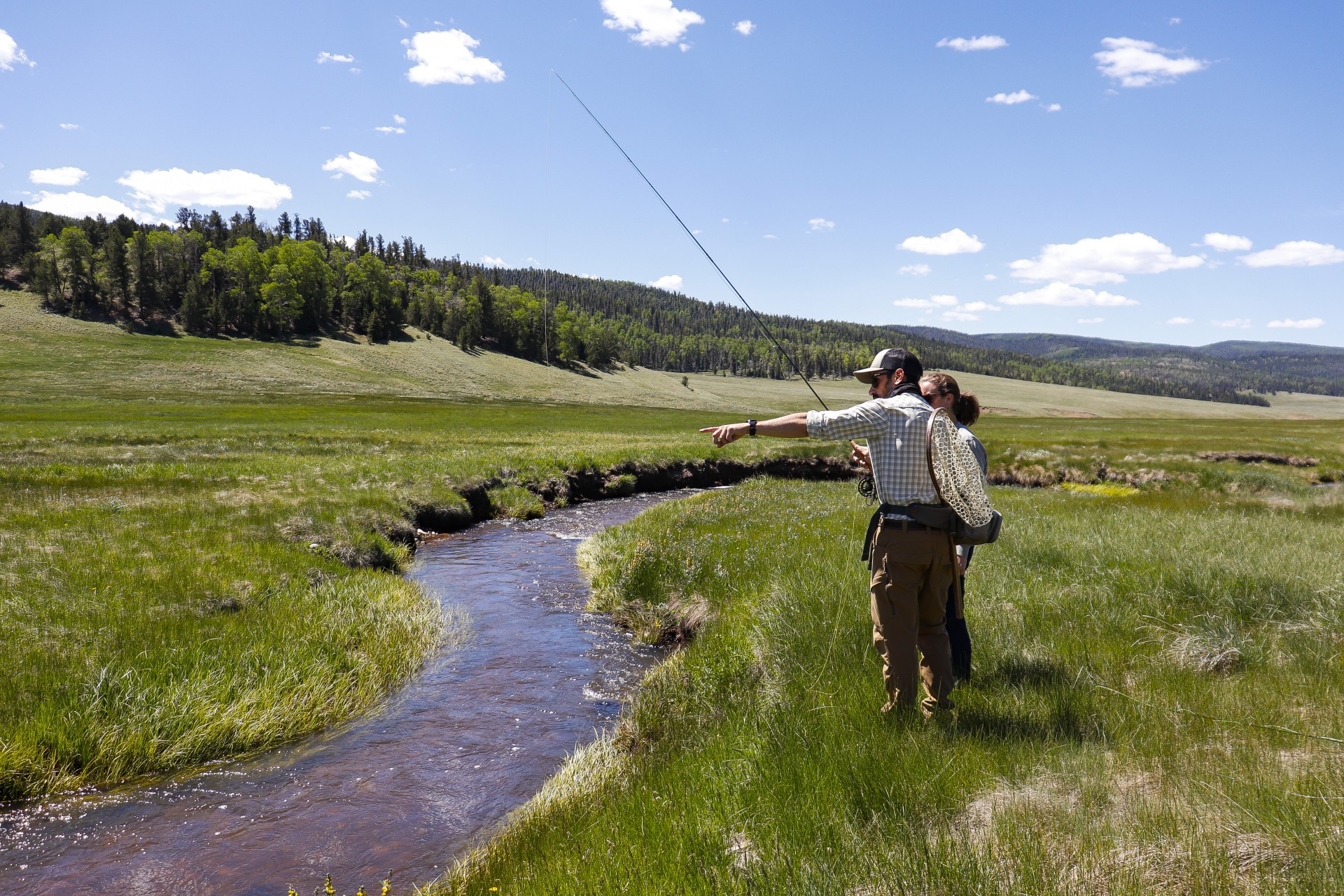
Without thinking I flick my wrist quickly to the right, feeling the pull on my rod and the adrenaline of setting the barbless hook. The taut fishing line zigzags across the silvery creek, which meanders below snow-covered peaks in the verdant Costilla Valley of Vermejo, a Ted Turner Reserve.
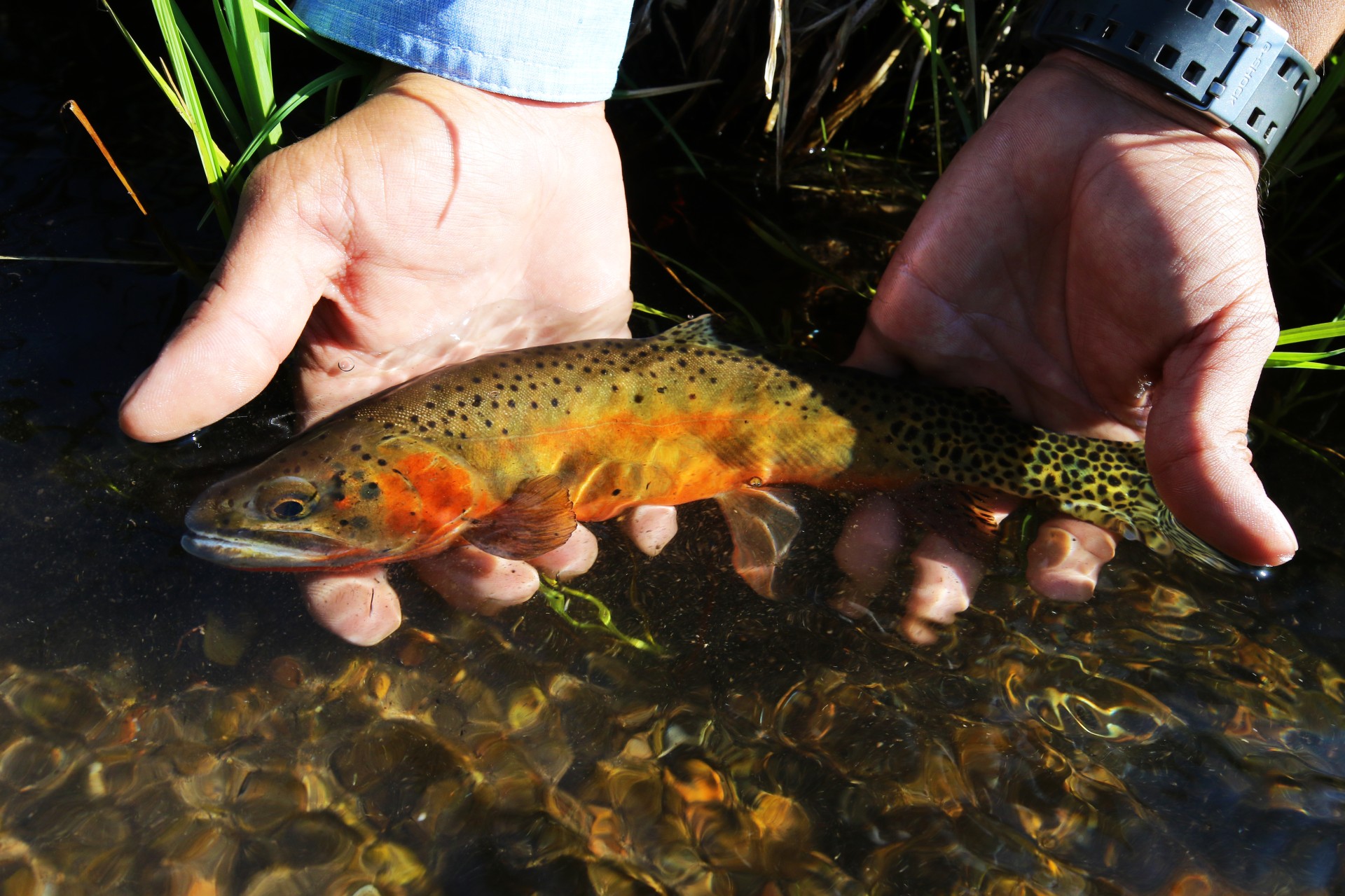
Following my guide’s calm instructions, I slowly coerce the invisible catch closer, until its metallic body breaks the stream’s glassy surface and launches into a dramatic display through the air. Far from being a seasoned fly-fishing angler, I feel a surge of pride in the brief moments spent admiring the Rio Grande cutthroat trout’s shimmering pink-tinged body and spotted tail, before quickly releasing it back to its clear water abode.
A Conservation Comeback
This is no everyday catch; but rather it marks one of North America’s greatest conservation comeback stories.
Rio Grande cutthroat trout – a native subspecies of New Mexico - are as integral to the land’s history as its ecosystems. Likely fished by the ancient Anasazi civilization, they were also the first trout to be identified in the New World by early explorers. Today, they are a rare bucket-list catch for fly fishermen, and an exciting challenge for novices like me, seeking a weekend escape into nature at Ted Turner’s Vermejo.
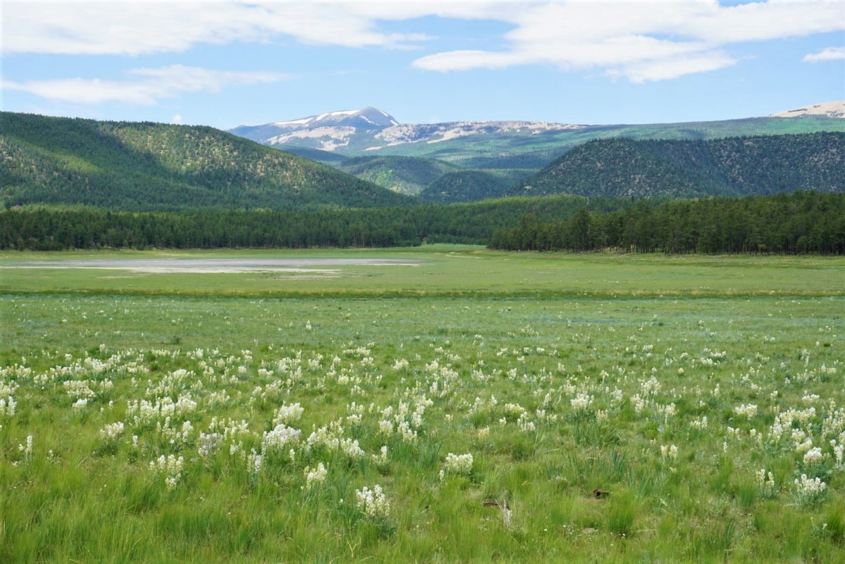
Straddling the border of New Mexico and Colorado, at more than half a million acres of forests, meadows, mountains, lakes, and streams, it’s like having a national park all to yourself. Think Yellowstone without the crowds.
Until recently, the survival of the Rio Grande cutthroat trout was anything but secure. Native populations were in steep decline as more aggressive and invasive trout species were introduced into their shrinking and warming habitat. The Rio Grande cutthroat was well on its way to being next in line for the endangered species list when Ted Turner and his dedicated team of field biologists intervened.
Restoring the Rio Grande Cutthroat Trout
Together with the New Mexico Department of Game and Fish, an ambitious rescue project was undertaken to systematically remove all the introduced brown, brook and rainbow trout – non-native species that were responsible for the cutthroat’s disappearance.
All together, more than 60 miles of stream and 18 lakes in the Costilla Watershed were treated and restocked with native Rio Grande cutthroats.
In a world of growing conservation concerns, the restoration of the Rio Grande cutthroat has been celebrated by environmentalists and fly fishermen alike. Today, Vermejo is among the only places where you can fish for them exclusively - making my catch even more of a thrill.
Ted Turner’s Conservation Legacy
It should come as no surprise that the man who launched the popular Captain Planet and the Planeteers cartoon series about a superhero who helps children save the planet would himself embody a superhero mission to “save everything”.
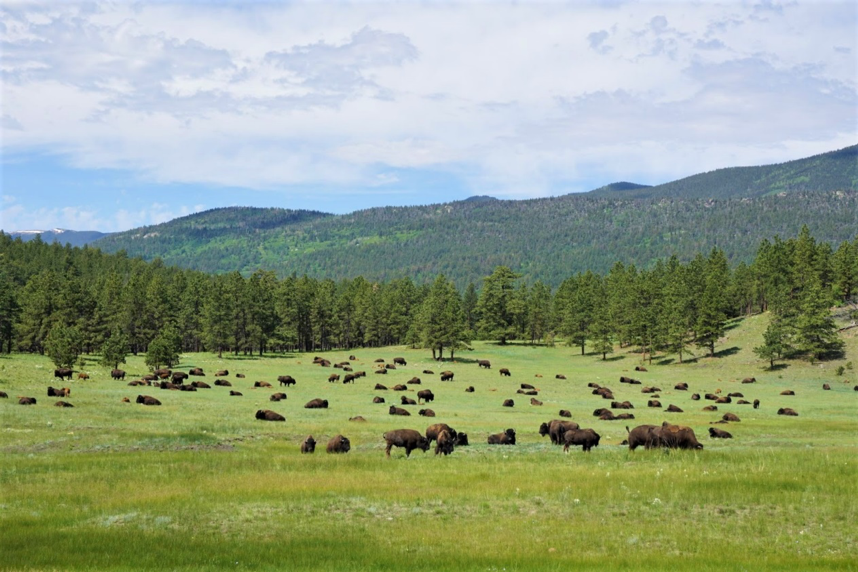
Vermejo has a long legacy of conservation, led by Turner’s commitment to protecting nature - including the free-roaming herds of North American Bison that, once faced with near extinction, now thrive in Vermejo’s steep hills and valleys.
A Retreat Rooted in Sustainability
My long sunny days in Vermejo’s high country seem to slip by as quickly as the cutthroats dart away after another successful catch-and-release. But as the majestic Sangre de Cristo mountains are illuminated by a late afternoon glow that signals it’s time to pack our gear, I am excited to return to Costilla Lodge – a hidden gem overlooking lush landscapes where elk roam and mule deer graze.
At 10,000 feet, the grand eight-bedroom log retreat is both a LEED certified model of sustainability, constructed from ranch materials and powered by solar energy, and an ecotourist’s dream with striking vistas from every window.
Seated around the central stone fireplace, guests exchange tales of their day’s adventures over hors d’oeuvres while the chef prepares a multi-course meal inspired by seasonal ingredients. I find myself drawn to the outdoor porch overlooking Vermejo’s natural kingdom as the sinking sun paints the sky with fiery watercolors.
Reflecting on my stay, I wonder where else in the world I could freely fish for a Rio Grande cutthroat trout in my own private stream before retreating to a luxury ecolodge far from the distractions of cell phones and the 24/7 news cycle.
The answer is a simple one: nowhere.
About the Author

Nina Boys is the Vice President of Sustainability & Beyond Green at Preferred Travel Group - guiding hotels, destinations, and travel companies around the world in advancing strategies that protect nature, celebrate culture, and empower local communities. A passionate voice in sustainable travel, Nina’s written work has been featured in National Geographic, among other publications, and she has been profiled and quoted in a wide variety of leading media outlets including the New York Times and Condé Nast Traveler.