Why We Burn: Forest Management And Prescribed Fire At Vermejo
As Vermejo's forester, I spend a lot of time thinking about what these forests looked like before a century of logging, grazing, and fire suppression changed them, and what it will take to bring some of that balance back. Prescribed fire is one part of that work, alongside logging, hand-thinning, and mechanical treatments. Guests who notice a scorched hillside or catch the smell of smoke during a visit are seeing that work in progress.
A LANDSCAPE BUILT TO BURN
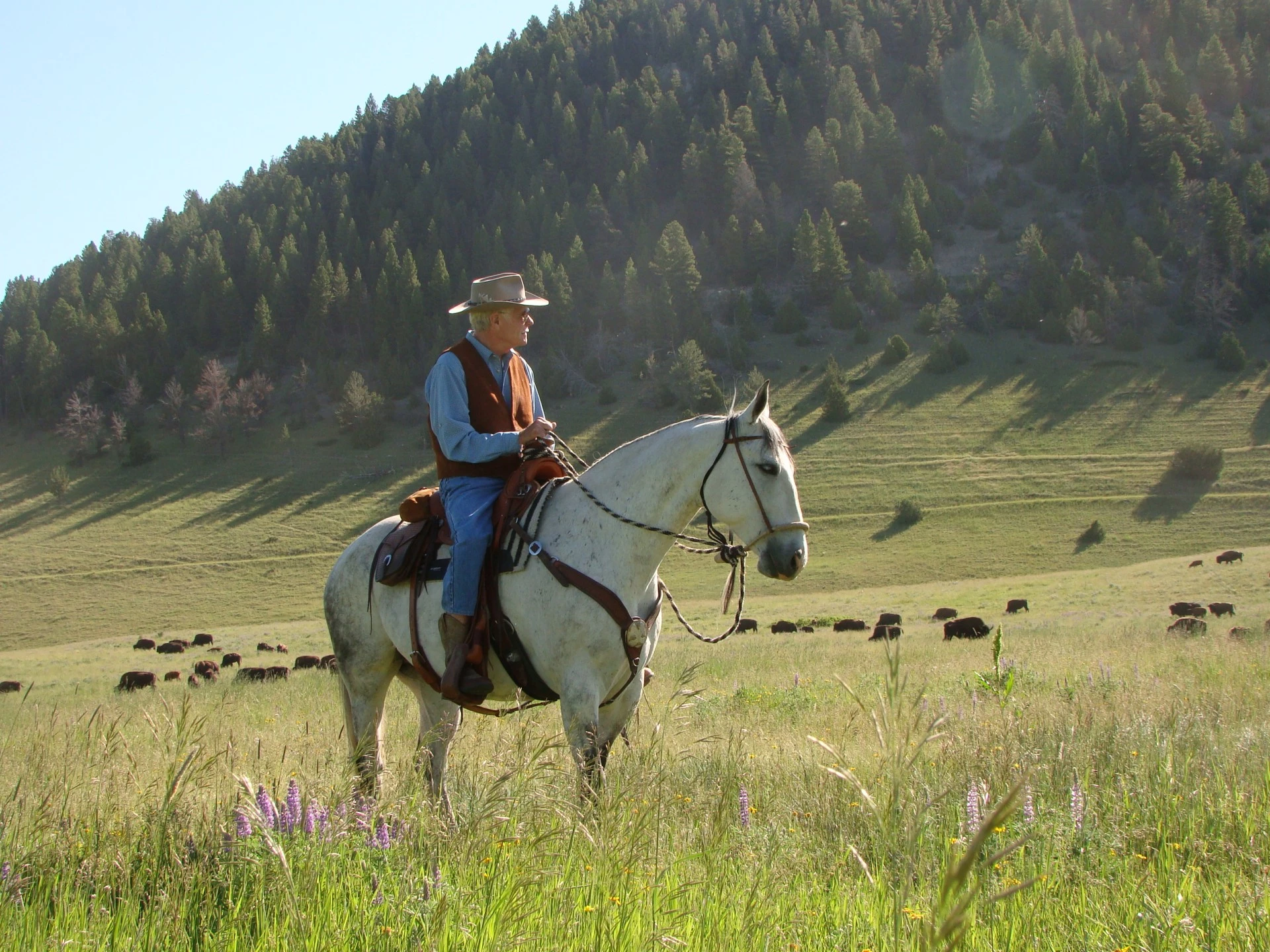
Ponderosa pine and woodland savannah make up the largest forest type on Vermejo, covering roughly half the property, or about 300,000 acres. Historically, these forests weren't the dense, uniform stands people often picture. They grew as a mosaic: open grassy meadows dotted with large, well-spaced mature pines, maintained by frequent, low-intensity fire.
In the southern Sangre de Cristo Mountains, that fire mostly came from the sky. Lightning strikes are common here, and lightning-caused ignitions, along with historic Indigenous burning practices, kept fire moving through these forests on a fairly predictable schedule: about every 6 to 13 years in ponderosa stands.
Frequent, low-intensity fire cleared out grasses, dead branches, and young trees while leaving mature, thick-barked pines standing. That bark, deeply furrowed and orange to reddish-brown at maturity, is itself a fire adaptation. It insulates the living tissue underneath from all but the hottest flames.
Guests who look closely at a mature ponderosa's cross-section, or at a stump along a trail, may notice a dark scar buried in the rings. That's a record of fire the tree survived.
WHAT A CENTURY WITHOUT FIRE DID
When fire suppression became standard practice in the last century, that cycle stopped. Without regular low-intensity burns, seedlings that would have been thinned out by fire kept growing, and many forests filled in.
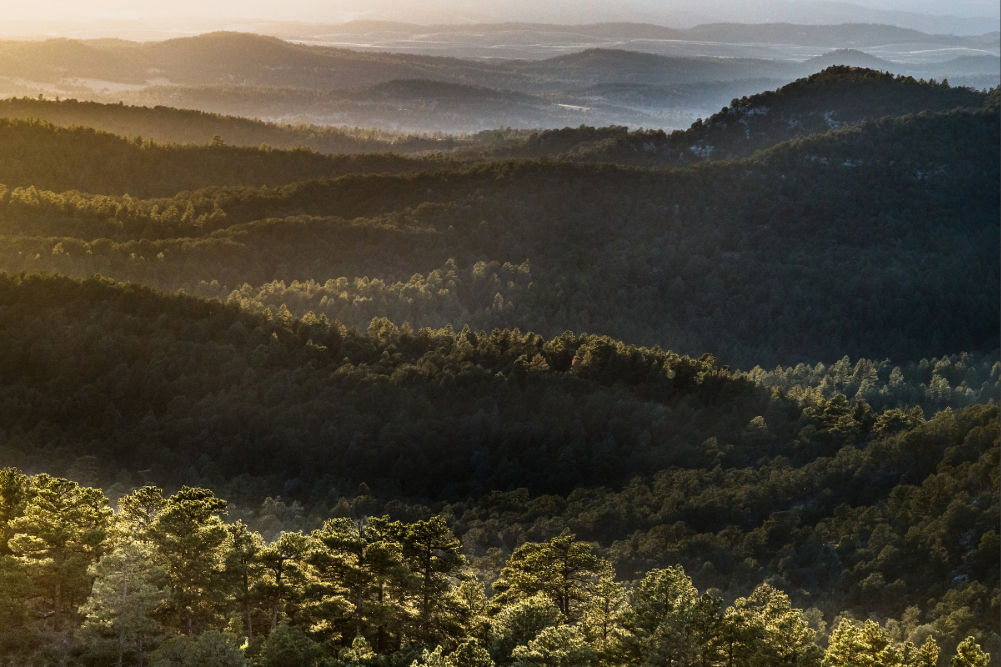
Today, ponderosa forest across the region, including parts of Vermejo, tends to be more crowded and even-aged than it once was, meaning trees are packed shoulder to shoulder instead of scattered across open ground. That density makes forests more vulnerable to insects, disease, and the kind of high-intensity crown fire that historically wasn't common here.
The Southwest more broadly is now seeing fire behavior that reflects this buildup of fuel, compounded by drought. Fires in the region can spread at 50 to 100 acres an hour under the wrong conditions, and recent large fires nearby, including the Ute Park Fire, Cook's Peak Fire, and the Hermit's Peak and Calf Canyon Fire, are reminders of what unmanaged fuel loads can produce.
THE FORESTRY TOOLKIT
Restoring balance takes more than one method because different parts of Vermejo need different treatment.
In dense ponderosa stands, we rely on traditional large-scale logging and thinning to reopen the canopy and let light reach the grasses below.
In pinyon-juniper woodlands, crews do more hand logging and thinning with chainsaws.
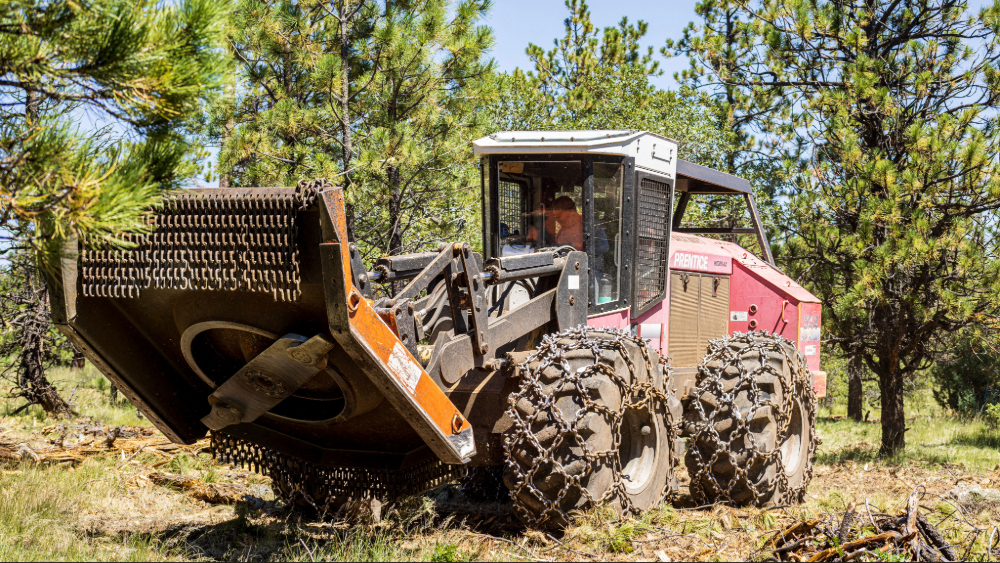
In the open meadows we're trying to keep open, we use tree-mulching, sometimes with a hydro-axe attachment that works like an oversized mower on encroaching small trees, along with prescribed burns.
Across all of this, Vermejo treats roughly 1,100 acres a year and sends about 20,000 tons of wood annually to local sawmills. About 75 percent of that timber goes to Western Wood Products in neighboring Raton, New Mexico, where it becomes fence posts, pallets, animal bedding, and wood pellet fuel. Another 25 percent goes to Silver Dollar Wood Products in Maxwell, New Mexico, for animal bedding. Even the smaller branches don't go to waste: they're mulched and returned to the soil.
More than 25 years of this combined treatment work has started to recreate a patchwork of tree ages, densities, and habitat types closer to what these forests looked like before suppression.
FIRE ON THE GROUND
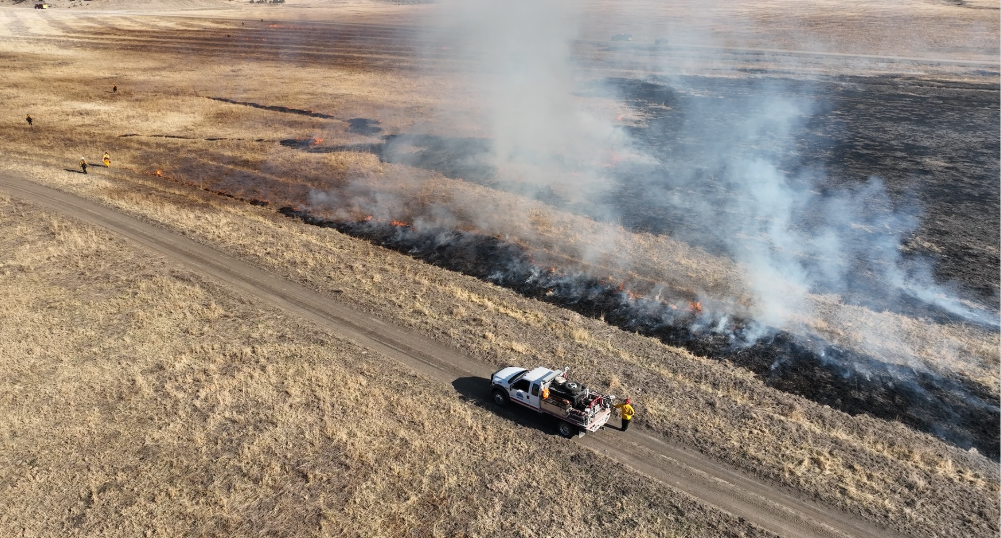
Prescribed fire is a deliberate, planned event, not a wildfire we're choosing to let run. Before any burn, our team accounts for weather, fuel moisture, and containment lines, and works within a designated unit with the goal of producing exactly the kind of low-intensity fire that benefits the ecosystem, not more.
In spring 2026, Vermejo hosted an S-219 Firing Operations course, a nationally recognized wildland fire training. About 20 trainees worked a 100-acre prescribed fire under supervision, using drip torches, engines, UTVs, and hand tools to practice ignition techniques and firing patterns in real time. It's the kind of hands-on training that builds the next generation of people qualified to plan and run these burns safely, here and elsewhere.
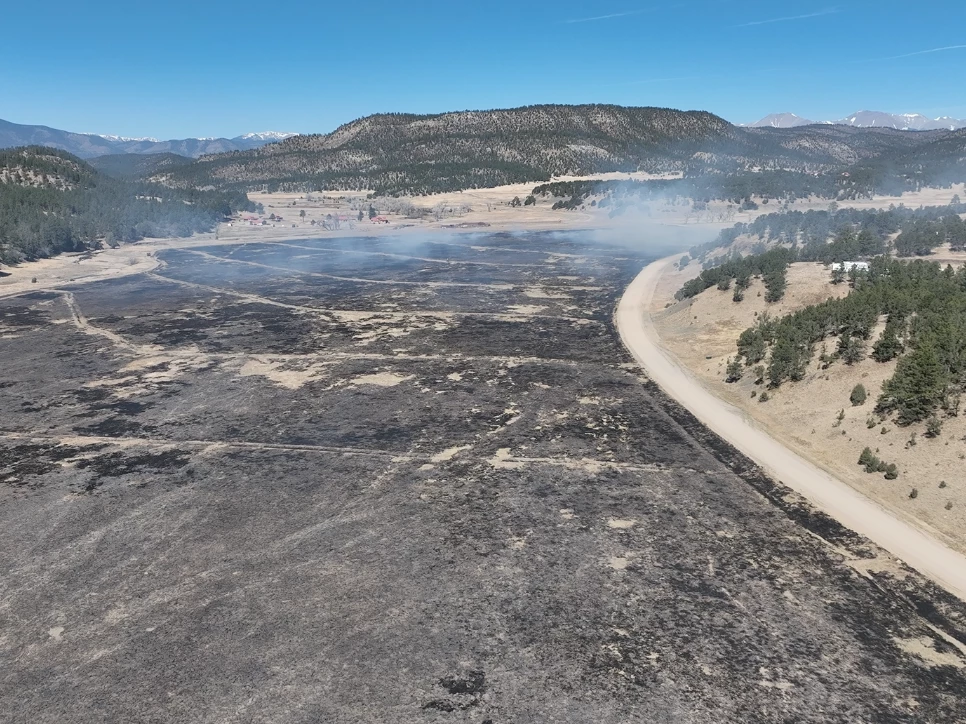
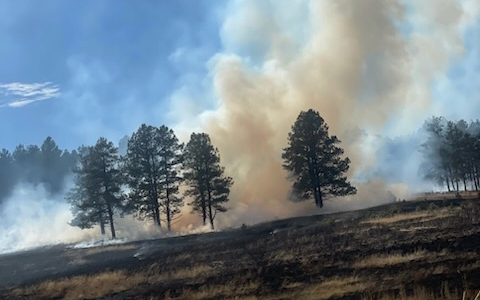
Guests who visit shortly after a burn will see charred grass, sooty stems, and ground that looks stripped bare. That's not damage but a normal, temporary phase. Within weeks, green shoots typically start pushing up through the ash, and over the following months, burned areas often show new grasses, wildflowers, and increased wildlife activity as the landscape responds.
KEEPING WATCH: VERMEJO'S FIRE DEPARTMENT
Forest management and fire response go hand in hand here. Vermejo's own fire department, Colfax County District 7, is staffed largely by Vermejo employees who volunteer as wildland and structural firefighters, along with EMS responders, all led by our Fire and Safety Coordinator, who also serves as the district Fire Chief.
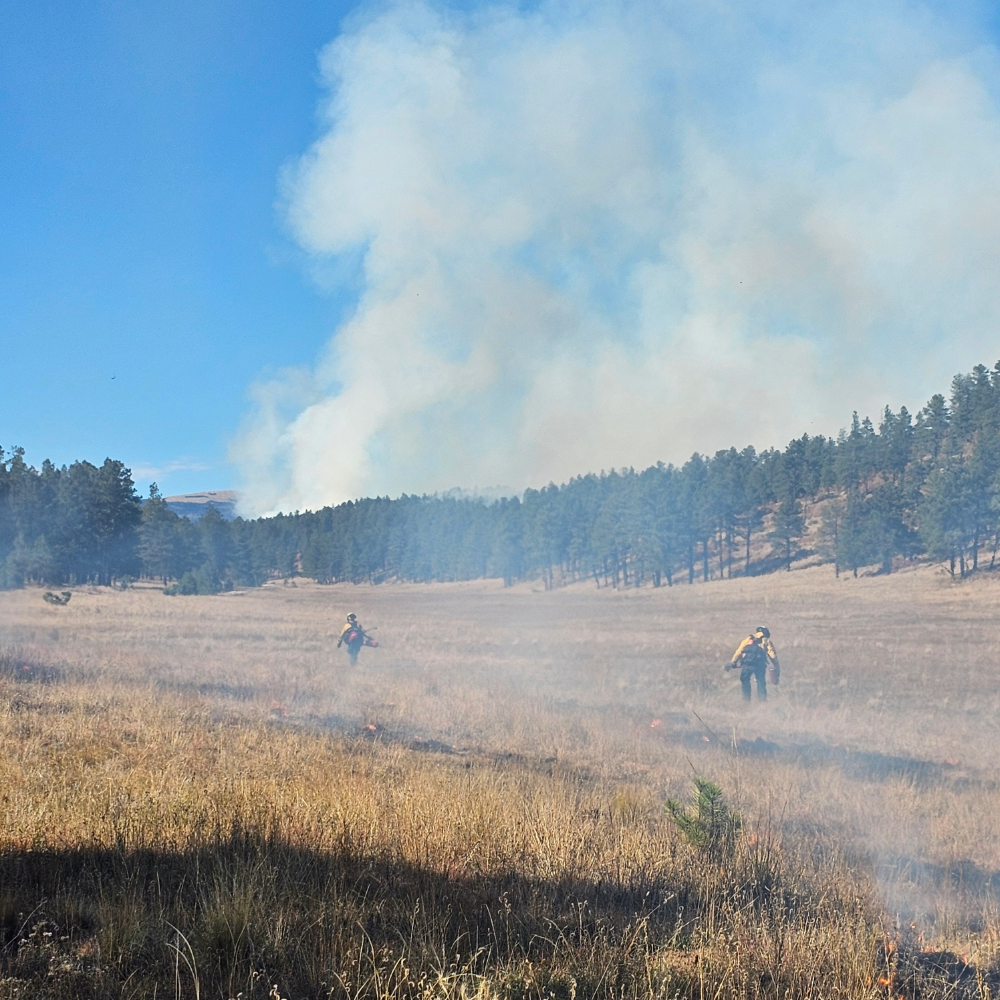
When a fire is reported, whether prescribed or wildland, a Type 6 engine with two to three wildland firefighters is usually first on scene to assess size and behavior. Conditions get relayed by radio to incoming Vermejo resources and to New Mexico State Forestry, and the department coordinates with neighboring departments when a fire calls for more support.
Sizes can range from a single lightning-struck tree to several acres of active flame. In 2023, CCD7 responded to a dozen wildland fires on the property. The previous year, its volunteers also rotated shifts supporting structure protection on the more than 340,000-acre Hermit's Peak/Calf Canyon Fire near Las Vegas, New Mexico.
FIRES THAT HAVE SHAPED THE LAND
Vermejo has had its own share of large burns over the past few decades.
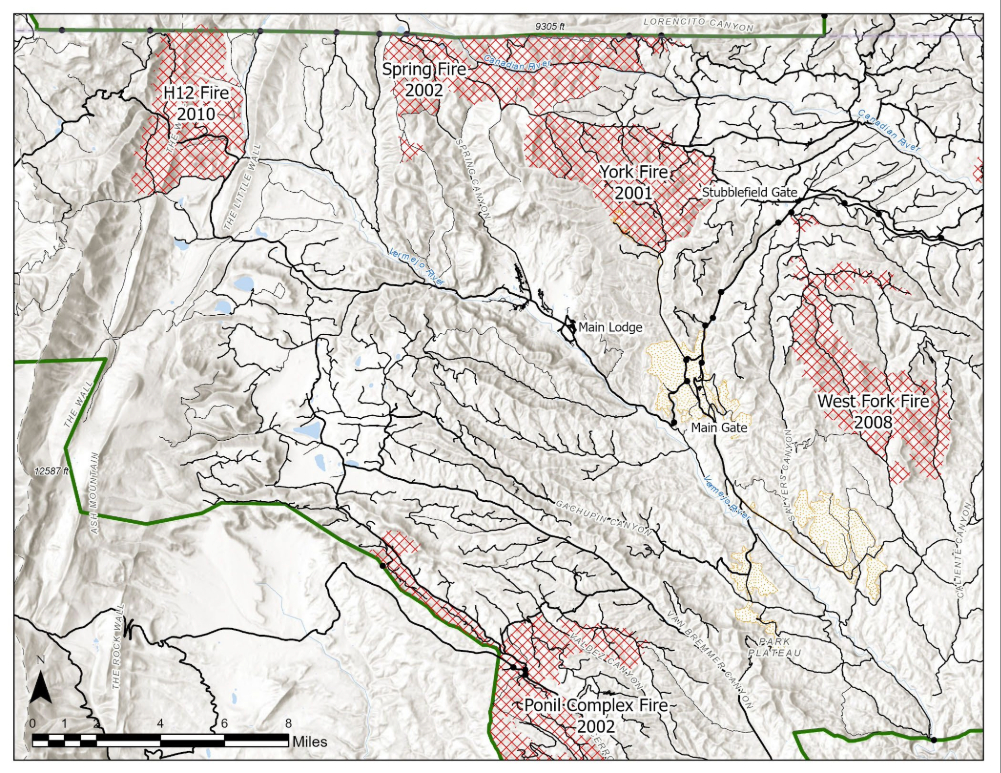
- The York Fire burned about 5,600 acres in Upper York Canyon in 2001.
- The following year, the Ponil Complex Fire, a roughly 92,000-acre fire that also crossed the Philmont Scout Ranch and the Valle Vidal Unit of the Carson National Forest, reached Vermejo along Cerrososo Canyon and burned about 9,570 acres on the property.
- That same year, the Spring Fire burned roughly 4,850 acres in Upper Spring Canyon.
- The West Fork Fire burned about 5,300 acres in the upper Chimney and Mercer canyons in 2008
- The H12 Fire burned about 5,100 acres near the Colorado border in 2010.
Each of those fires reshaped part of the landscape, and each is part of why we think about forest density and fuel loads the way we do today.
WHAT TO DO IF YOU SEE SMOKE
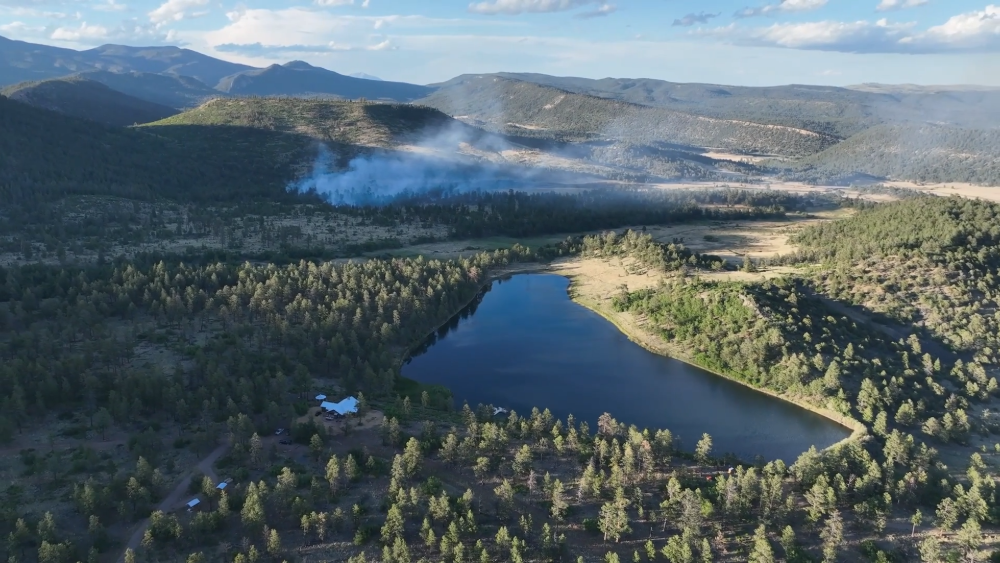
If a guest spots smoke while out on the property, staying calm and reporting it accurately is the most useful step. Guests should contact the front desk or any Vermejo staff member with their best estimate of location, smoke color, and size.
For example: "About one mile south of Crow Gate, small gray plume, no visible flames."
That information gets relayed immediately to the Vermejo Fire Department or New Mexico State Forestry.
LOOKING AHEAD
The work is never done in a single season or year. Restoring a fire-adapted forest to something closer to its historic structure takes decades of thinning, logging, and burning, repeated across the property on a rotation.
What guests see on any given visit – a recently thinned stand, a blackened meadow, a crew running a training burn – is one step in that longer process.
The goal stays the same: meadows that stay meadows, forests that stay forests, and wildlife that benefits from both.
ABOUT THE AUTHOR
Ryan Simoson is the Vermejo Forester. He joined Vermejo in fall 2022 after spending 13 years in central Minnesota managing county forest lands. Ryan's main duties at Vermejo include setting up timber sales, managing logging crews, administering noxious weed contracts, and fighting wildland fires.