Night Skies at Vermejo: Looking Up in the Winter Dark
On a clear night at Vermejo, guests may notice that the sky holds more than they expected. Away from the glow of cities, thousands of stars become visible, along with a pale, luminous band stretching across the sky: the Milky Way, our home galaxy. In winter, when darkness arrives early and lasts longer, there is more time to see it.
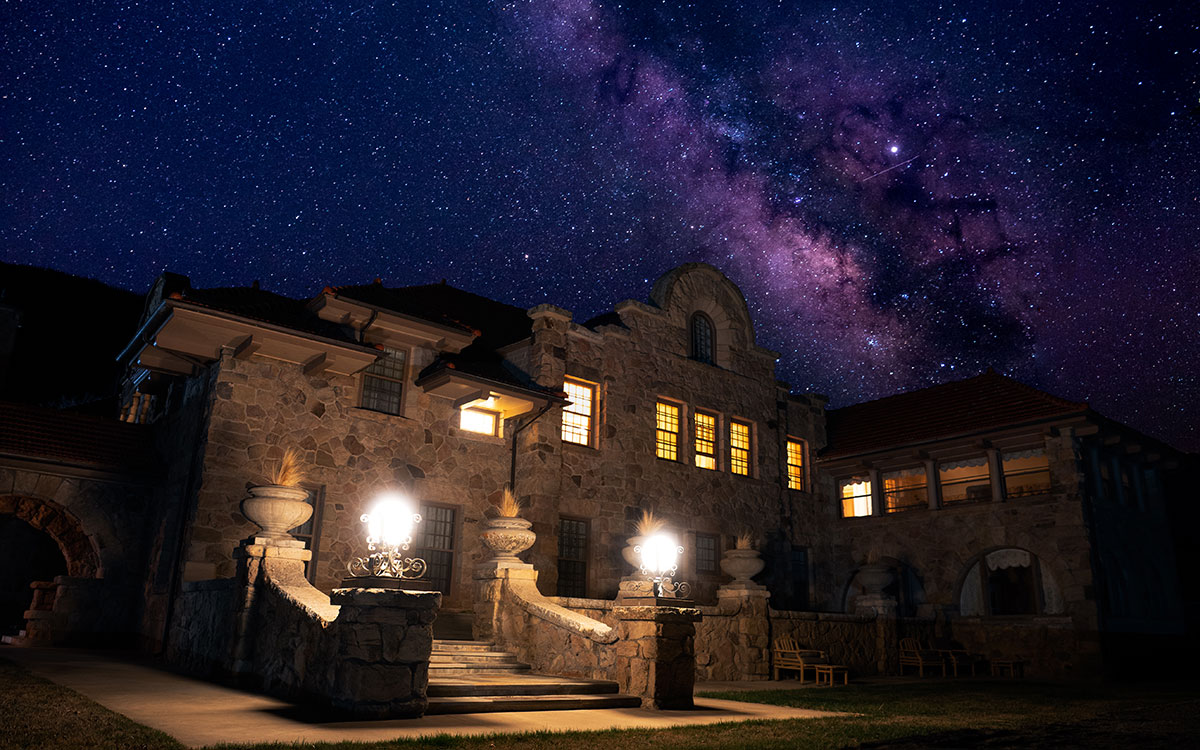
Across Vermejo's 558,000 acres, we spend a good deal of time studying what lives on the ground. The night sky is part of the same landscape, and it is worth understanding in its own right.
Why Vermejo's Sky Is So Dark
In cities and suburbs, artificial light obscures all but the brightest stars. Vermejo's secluded setting, far from that light, offers a very different view of the universe.
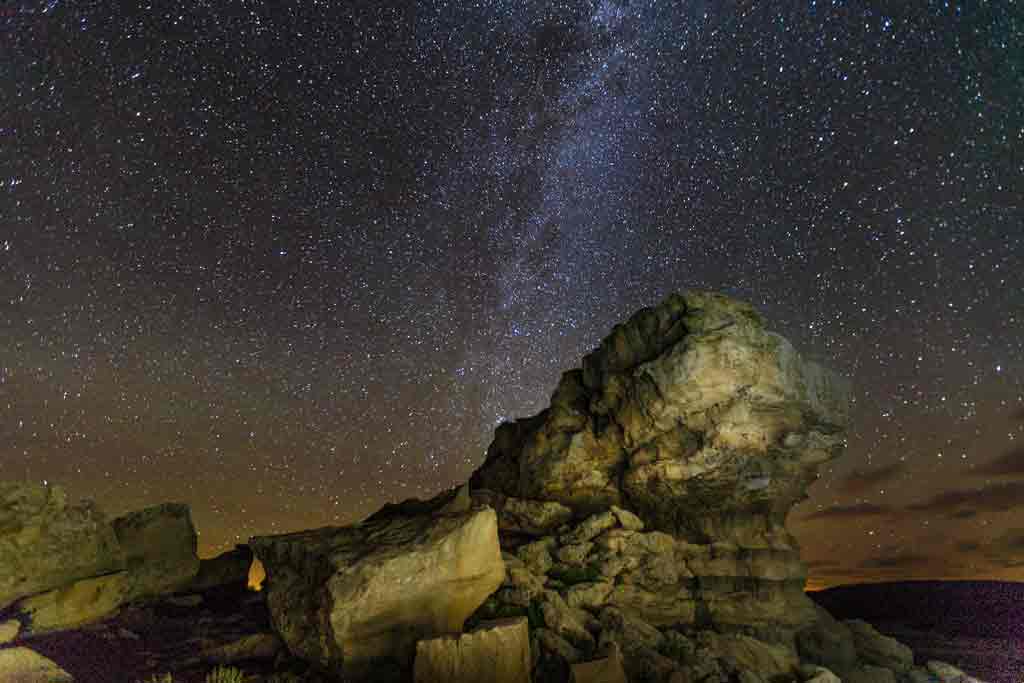
Astronomers describe night-sky darkness using the Bortle scale, which runs from Class 1 (an exceptional dark-sky site) to Class 9 (a brightly lit inner-city sky). Class 2 is a dark-sky site, Class 3 is a rural sky, and the numbers climb through suburban and city skies from there.
- Bortle ratings at Vermejo are estimates, and they vary by location:
- Castle Rock and Costilla Lodge: about 2.2
- Main Lodge lawn: about 3.2
- Most Vermejo locations: between 2 and 3
At those levels, the Milky Way can be seen with the naked eye on clear, moonless nights. The conditions matter, as clouds and moonlight both reduce what is visible.
What You're Looking At
The Milky Way is a vast spiral galaxy. Our Sun sits in a smaller feature called the Orion Spur, between two of the galaxy's larger spiral arms, the Sagittarius and Perseus arms.
Our solar system takes approximately 230,000 years to orbit in our galaxy. When we look toward the bright band of the Milky Way, we look through the crowded disk of our neighbors. We are not looking at the Milky Way from outside. We are inside it, which is why it appears as a band across the sky rather than as a shape, such as the Andromeda Galaxy.
Toward the galactic center there is a region so crowded with gas and dust that much of it is hidden from visible-light telescopes. Infrared telescopes can see through that dust. They reveal millions of stars surrounding a supermassive black hole about four million times the mass of our Sun. Our Sun has the volume of 1.3 million earths.
Stories Written in the Stars
When humans were gathered around a fire, they looked to the skies for understanding. Man imbued the stars and constellations with stories of hubris, tragedy, redemption, and sacrifice. The stories were first logged by Ptolemy in the second century in Egypt and the stories were later codified in Baghdad during the Golden Age of Islam.
Stars grew in importance during the European Age of Discovery, with the North Star (Polaris) giving advantage to the Global North as a steady point of reference. Scientifically understanding geolocation through latitude without Polaris in our sights, was a major leap forward in world interconnectedness.
Science is how we come to understand our place in the universe. From the Hubble telescope surprise revelation of the Deep Field in 1995 to the deployment of the James Webb space telescope, our understanding on the night sky has moved into new territories as the ability to gaze into our galactic center and test hypotheses by measuring how light bends its way towards Earth.
Finding North Without a Compass
The constellations surrounding Polaris, the North Star, are called circumpolar constellations. From northern latitudes, they appear to circle counterclockwise Polaris rather than rising and setting the way many other stars do. The Big Dipper is one of the easiest ways to locate Polaris.
- Find the two stars that form the outside edge of the Dipper's bowl, Merak and Dubhe.
- Imagine a line running up from Merak through Dubhe and continue roughly five times the distance between them. You will arrive near Polaris. Polaris is not the brightest star, ranking 48th. Polaris is also the end of the handle of the Little Dipper.
- Drop an imaginary line from Polaris straight down to the horizon. That direction is True Geographic North.
Winter Is a Good Time to Start
Winter's longer hours of darkness give stargazers more opportunity to look up. Guests do not need special equipment to begin. A few habits help:
Before dinner look to the west to assess cloud cover to see if the evening is right.
- Step away from building lights.
- Put your phone away.
- Give your eyes time to adjust. Five to ten minutes is a good target, and the longer you stay in the dark, the more your eyes will begin to reveal.
- Find the Big Dipper, and use it to locate Polaris.
- Look for the Milky Way.
- Then stop searching for anything at all.
That last step is deliberate. Once your eyes have adjusted, the sky is worth simply watching.
Looking Ahead
Dark skies are a feature of the landscape that is easy to overlook, and easy to compare once you start paying attention. Guests can check the Bortle rating of their own favorite places and see how they differ from what is visible at Vermejo.
The next clear, moonless night at Vermejo is a good opportunity to try it. Step outside, wait for your eyes to adjust, and look up.
Insider Tip: Consider planning a visit during one of the many annual meteor showers. Bringing a red lens headlamp to Castle Rock is an employee ritual in the summer.
About The Author
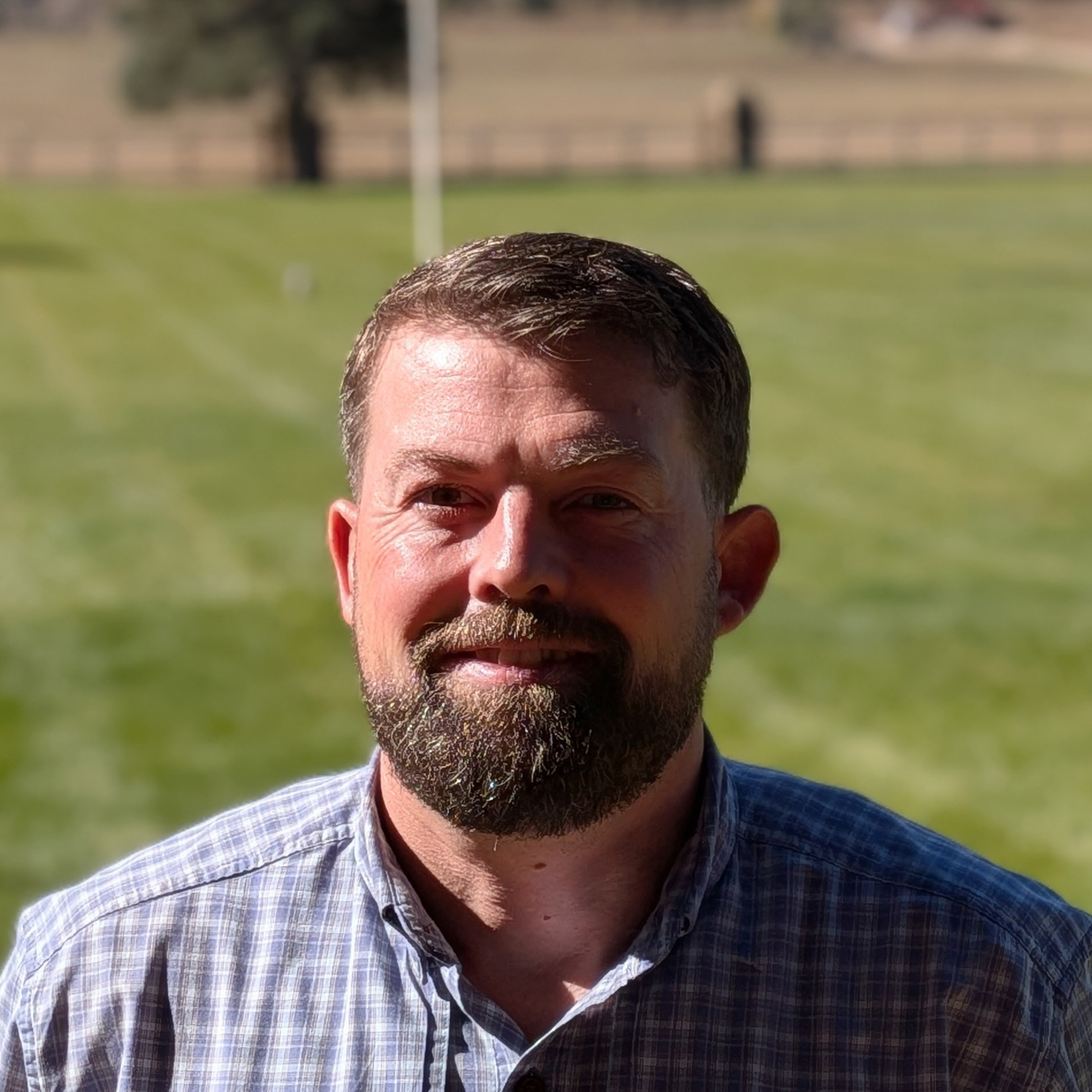
Jason has been the Groups & Events Supervisor at Vermejo since 2023. Jason started his hospitality journey twenty years ago with The Ritz-Carlton Hotel Company working at a golfing resort in Georgia, the city of Denver, the island of St. Thomas, and the slopes of Aspen, Colorado.
"My father led me in outdoor education at a young age. I was camping and rock climbing as a child. I came to Vermejo as a "Colorado Outdoorsman": hiking, climbing, and camping. Vermejo has allowed my foundation of knowledge and love of the Outdoors to grow with exposure to fishing, hunting, and the inexhaustible space in which we live.
My curiosity of the night sky came naturally with the intellectual questions that a calm, quiet evening looking up brings to us all. A sense of infinite space and knowing that all of man has looked up in wonder is a humbling experience that leaves a person in awe.
My focus with stargazing is providing an orientation of the night sky through the lens of civilization's technological progress. Plus, with the ambient light so low, the possibility of a shooting star is always a hope for our guests"
Additionally, Jason provides Southwest History presentations for groups, plays the detective for the Murder Mystery reception, supports the Activities department with Survivor's Challenge and tours, and plans the holidays at Vermejo.