Ted Turner: “We Must be First to Do the Most Difficult Work”
From the reintroduction of endangered red-cockaded woodpeckers in Florida to one of his final conversations with Ted Turner, Mike Phillips, Director of Turner Natural Resources, reflects on three decades of leadership, conservation, and the enduring responsibility to protect species facing uncertain futures.
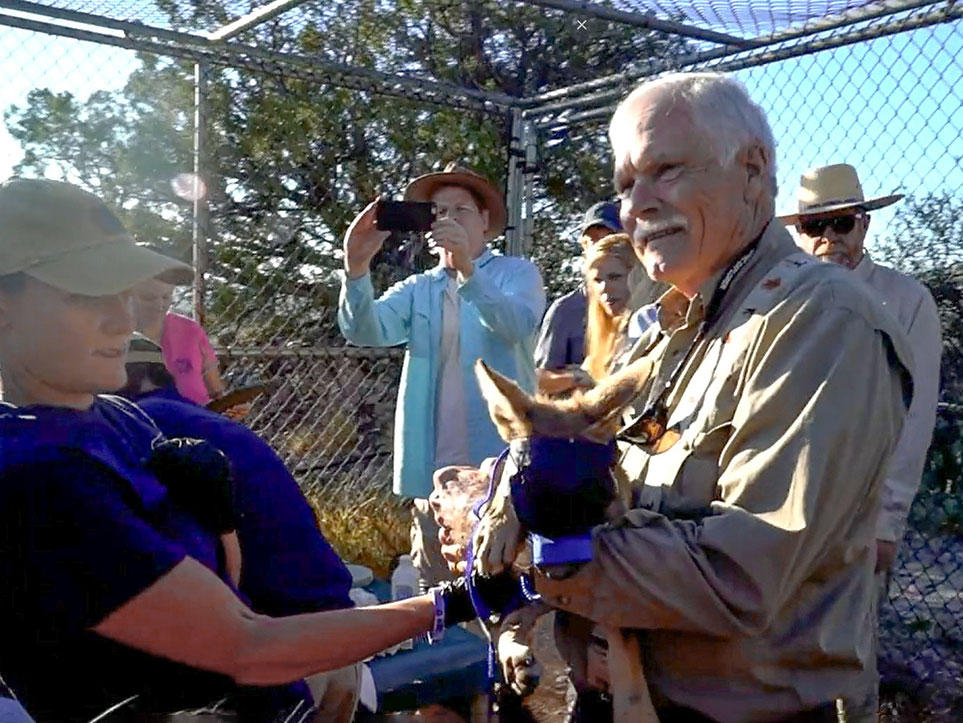
I’ve been a member of Team Turner for more than 30 years. During that time, I experienced many moments of inspiration and instruction from Ted Turner. But one memory continues to shine brighter than all the others.
In 1998, we launched an ambitious effort on behalf of the red-cockaded woodpecker, a notoriously difficult endangered species to conserve in the southeastern United States. At the time, no private organization had attempted what we were about to do: reintroduce the species to Ted’s Avalon Plantation in Florida.
As we walked through the pine forest after Ted released the very first bird, I said to him, “Ted, no private organization has ever done what we’re doing.”
Without breaking his long stride, he replied, “Mike, we should always be the first to do the most difficult work. That’s how we’re going to lead.”
And he just kept walking.
That was Ted. Audacity was expected. Leadership was expected. Success in service of something larger than ourselves was expected.
And from that moment forward, Team Turner carried those expectations into every conservation effort that followed.
The reintroduction of the red-cockaded woodpecker helped influence how endangered species recovery efforts are approached under the Endangered Species Act and reinforced the important role private landowners can play in restoring wildlife populations.
Ted approached conservation the same way he approached life: with urgency, courage, and an unwavering belief that meaningful change was possible. And that people had a responsibility to act.
That belief shaped decades of wildlife restoration work across Turner lands, including efforts involving bison, Mexican wolves, prairie dogs, black-footed ferrets, and other imperiled species and habitats.
One of the final conversations I had with Ted brought all of that into focus.
We had gathered in Denver for a large Team Turner meeting hosted by Ted. It had been a long and emotional day, and despite being in poor health, Ted remained fully engaged, inspiring everyone around him with his attention and determination.
That evening, during dinner, he called me over to the table. Leaning in close, I heard him ask quietly, “Mike, we did okay, didn’t we?”
I told him, “Ted, we did exactly what we set out to do so long ago. From day one, Team Turner has been the most important private effort in the world to use endangered species reintroductions to restore viable wildlife populations as direct redress of the extinction crisis. Ted, we did exactly what we set out to do.”
Tears welled in his eyes as he asked one more question.
“And Mike, the wolves are doing okay?”
I told him, “Ted, the wolves are doing great.”
With that, he smiled and raised his hand for a high-five.
The wild world, especially those species facing uncertain futures, owes Ted Turner a tremendous debt of gratitude.
I do too. He was a great boss and a good pal. He inspired by giving voice to the voiceless and attention to the unattended.
The life that he chose to lead was a great gift to humanity.