Why Snow Matters: The Journey Of Water At Vermejo
Summer monsoons bring welcome rain to Vermejo, greening the landscape and providing short-term relief for streams, wetlands, and wildlife. But these storms are only part of the picture. The long-term health of our watersheds depends on something less visible in summer: the snow that falls during winter.
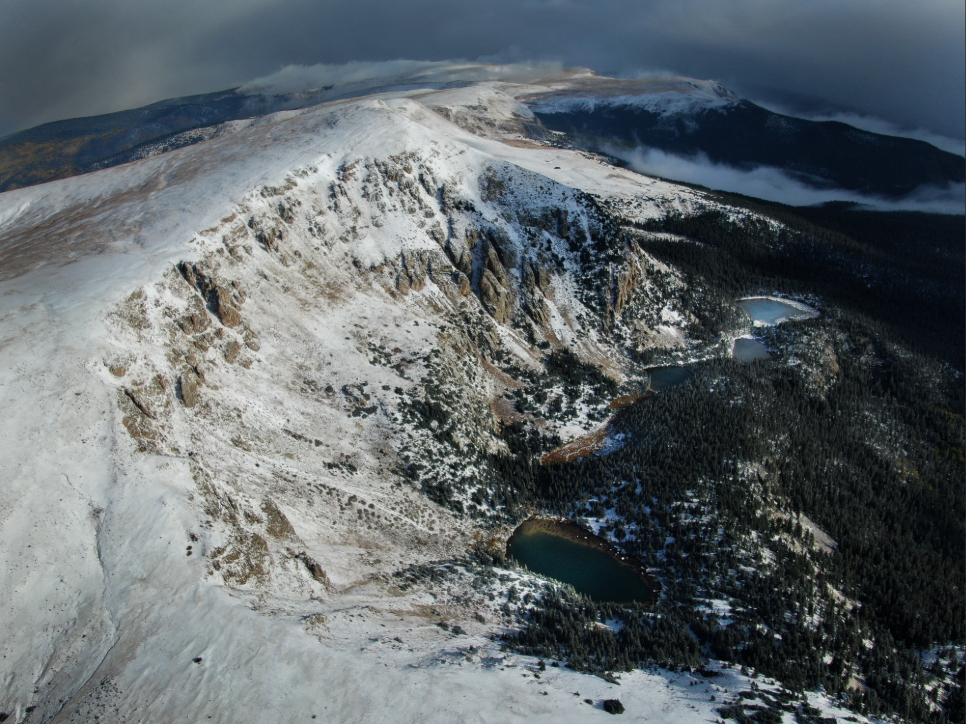
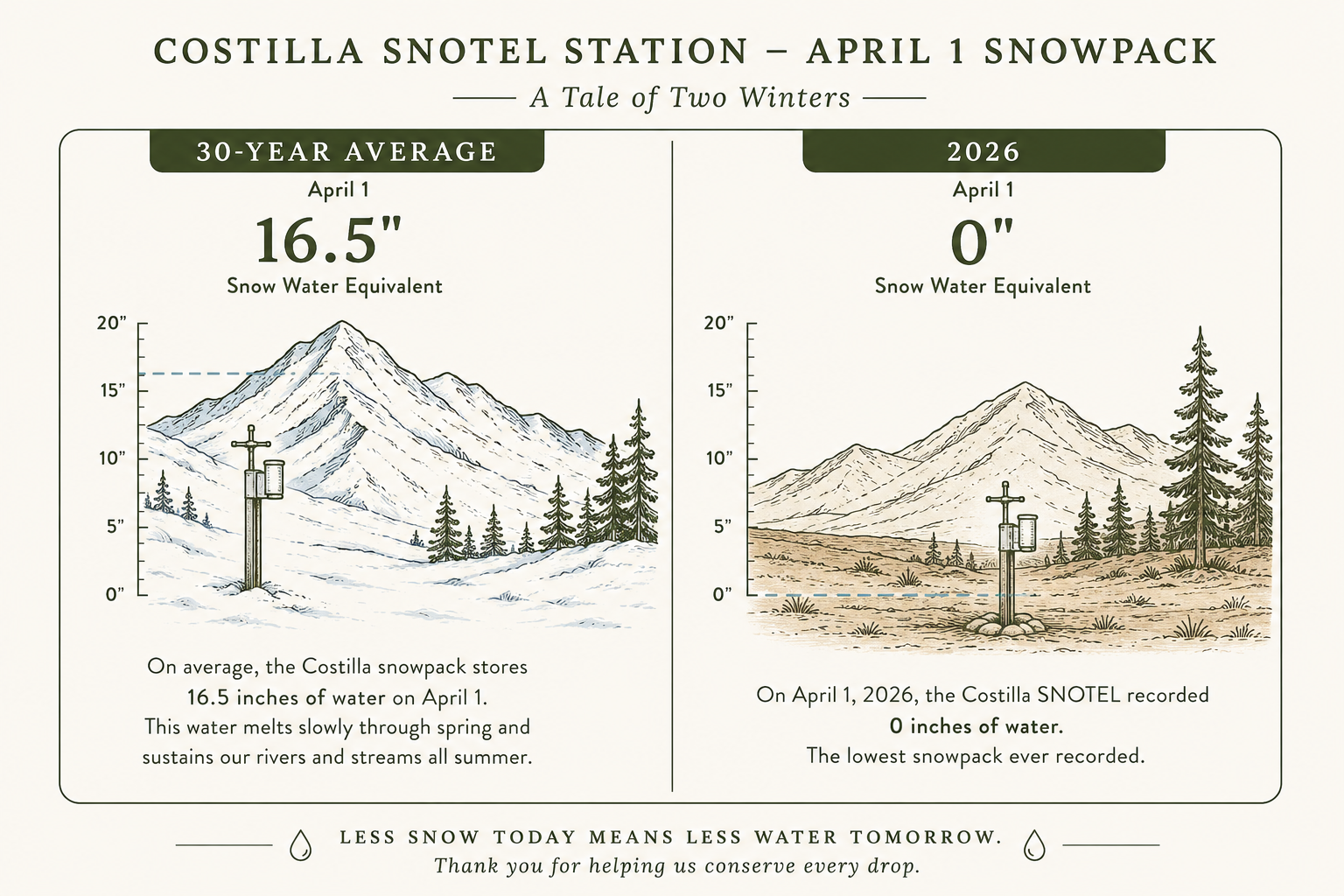
Over the past three winters, Vermejo has experienced below-average snowpack. During the winter of 2025-2026, the Costilla SNOTEL station recorded the lowest snowpack on record. Those conditions are now reflected in the rivers, wetlands, groundwater, and wildlife habitat across the property.
Understanding how water moves through the landscape helps explain why winter snow remains the foundation of healthy ecosystems throughout the year.
THE WEST’S LARGEST RESERVOIR
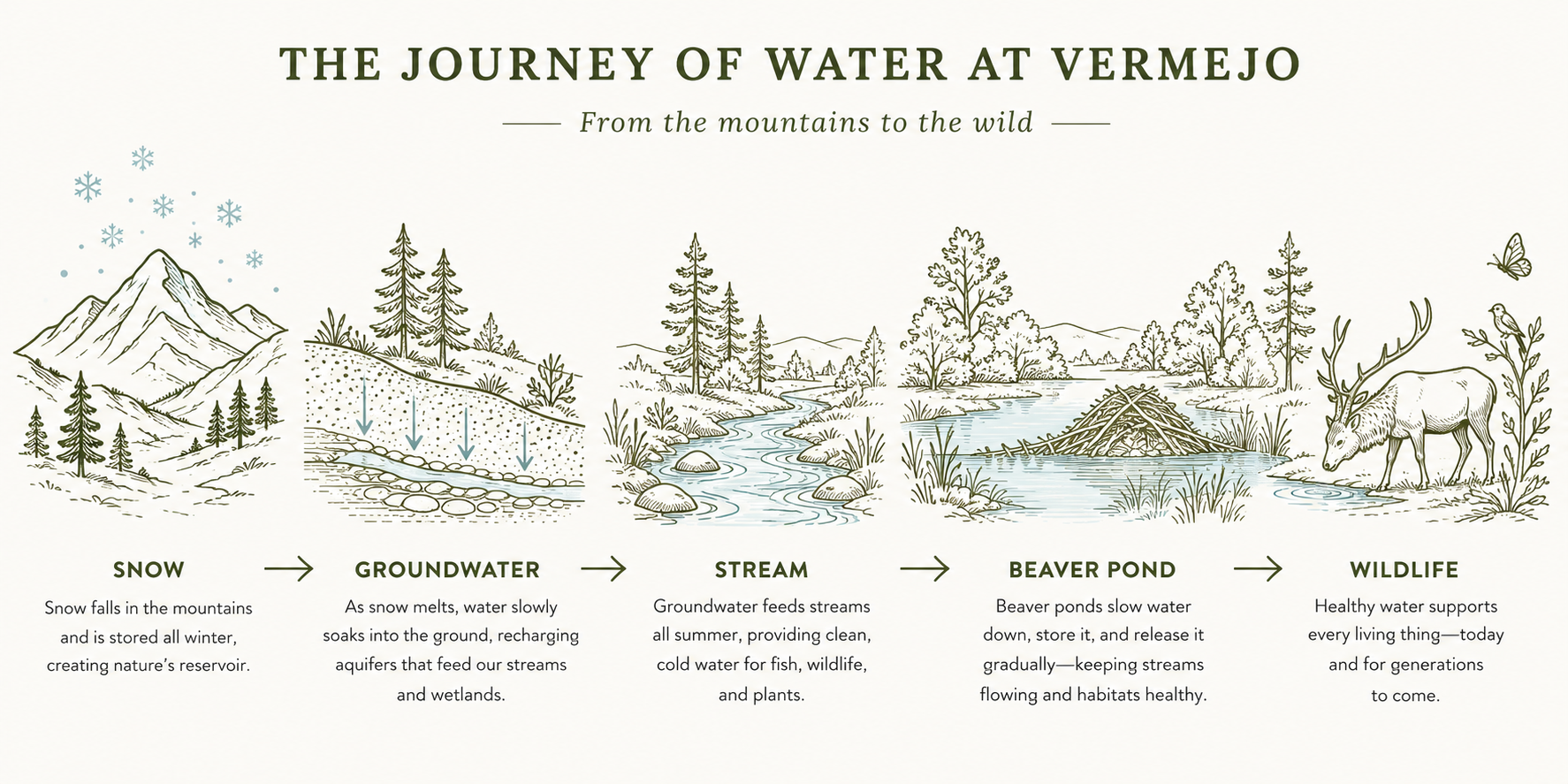
When people think about reservoirs, they often picture large lakes created by dams. In the western United States, however, the largest natural reservoir is mountain snowpack.
Snow accumulates throughout the winter, storing water until temperatures rise in spring. As the snow melts, water slowly infiltrates the soil, recharging shallow aquifers that sustain streams, wetlands, and springs throughout the summer. This gradual release is one of the defining characteristics of mountain watersheds.
At Vermejo, we monitor five to six nearby SNOTEL stations operated by the Natural Resources Conservation Service to better understand how winter conditions may influence streamflow, groundwater recharge, range conditions, and wildlife habitat in the months ahead. Vermejo spans three major watersheds, making these observations an important part of understanding the health of the landscape.
SNOW AND RAIN SERVE DIFFERENT ROLES
The southern Rocky Mountains receive moisture from both winter snow and summer monsoons. Each plays an important role, but they do not contribute water in the same way.
Rainfall often produces surface runoff that temporarily raises stream levels or fills ponds. Snowmelt moves more slowly, allowing water to infiltrate the ground and replenish the aquifers that provide long-term streamflow. Even in years with similar amounts of total precipitation, a shorter snow season can reduce groundwater recharge because more precipitation falls as rain and snow melts earlier in the spring.
This distinction helps explain why healthy snowpack remains essential, even during summers with active monsoon patterns.
THE WATER BELOW THE STREAM
Not all of the water in a river is visible.
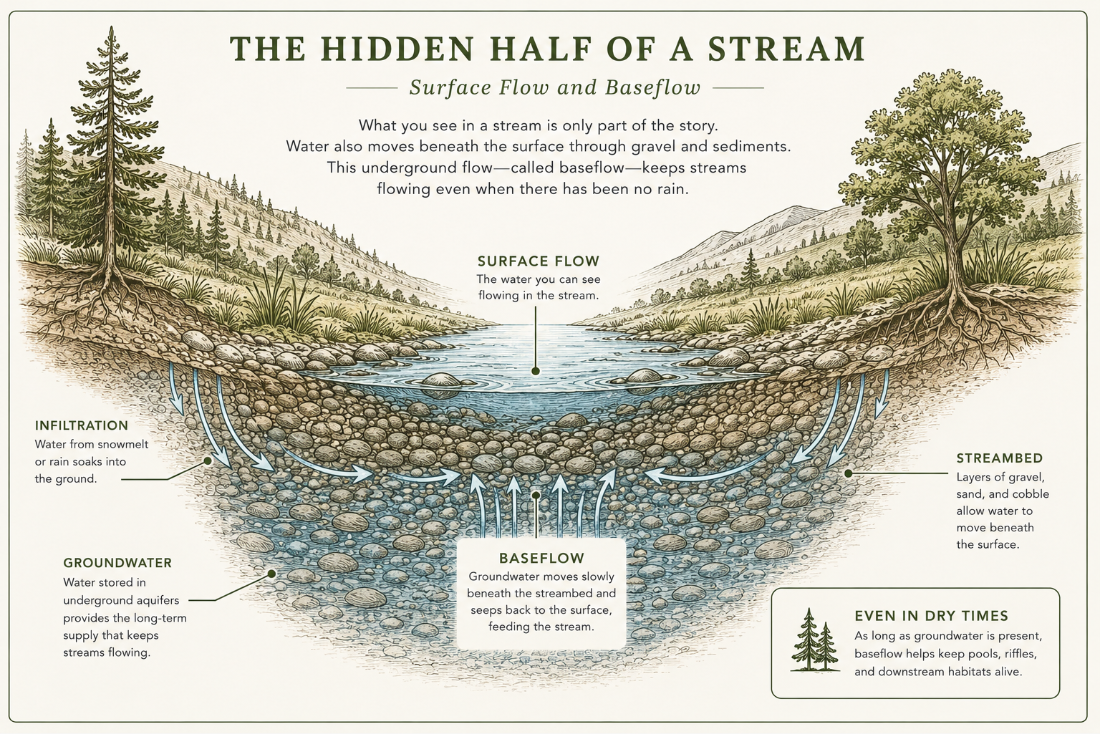
Instream flow is the water moving across the surface, while baseflow is the water moving beneath the streambed through gravel and sediments. In some locations, streams naturally disappear below the surface before reemerging where underlying bedrock redirects the flow.
This occurs along portions of the Vermejo River near headquarters. During dry years, groundwater flowing beneath the streambed becomes increasingly important because it continues supplying water after surface runoff has diminished.
BEAVERS: NATURE’S WATER ENGINEERS
Beavers play an important role in maintaining healthy watersheds.
Their ponds slow the movement of water, allowing more of it to infiltrate surrounding soils and recharge shallow groundwater. During dry periods, those wetlands gradually release stored water back into nearby streams, helping sustain downstream flows.
These ponds also provide important refuge habitat for Rio Grande cutthroat trout. As stream temperatures rise, deeper beaver ponds offer cooler water with higher dissolved oxygen levels, conditions that improve habitat for native trout and many other aquatic species.
IMPACTS IN SUMMER 2026
The effects of three consecutive years of below-average snowpack are now evident across Vermejo.
Some reaches of the Vermejo River near headquarters no longer have surface flow, while other sections consist of intermittent pools connected by groundwater beneath the streambed. Beaver ponds above and below Headquarters continue to provide wet habitat for fish, amphibians, aquatic insects, birds, and wildlife, including bison that rely on these water sources during the summer.
Low streamflows also contribute to warmer water temperatures, creating additional challenges for native Rio Grande cutthroat trout, which depend on cold, well-oxygenated streams. These observations illustrate how closely snowpack, groundwater, streamflow, and aquatic habitat are connected.
LOOKING AHEAD: HOW GUESTS CAN HELP
The monsoon season has provided meaningful benefits by improving forage, increasing humidity, and producing temporary increases in streamflow. Those are positive developments for the landscape.
At the same time, healthy winter snowpack remains essential for recharging the shallow aquifers that sustain Vermejo's rivers throughout the year. As we look ahead to autumn and the coming winter, each snowfall will play a role in shaping stream conditions, wetlands, wildlife habitat, and water availability in the seasons that follow.
Water conservation is one way we can help support these natural systems. Vermejo's drinking water is supplied by shallow aquifers connected to the Vermejo River valley. Using water efficiently reduces demand on those aquifers while nature works to replenish them.
Water moves through this landscape over months and seasons, connecting mountain snow to streams, wetlands, wildlife habitat, and the experiences our guests enjoy throughout the year.
Every gallon conserved today helps protect the streams, wetlands, wildlife, and drinking water we all depend on. Thank you for helping us conserve every drop.
ABOUT THE AUTHOR
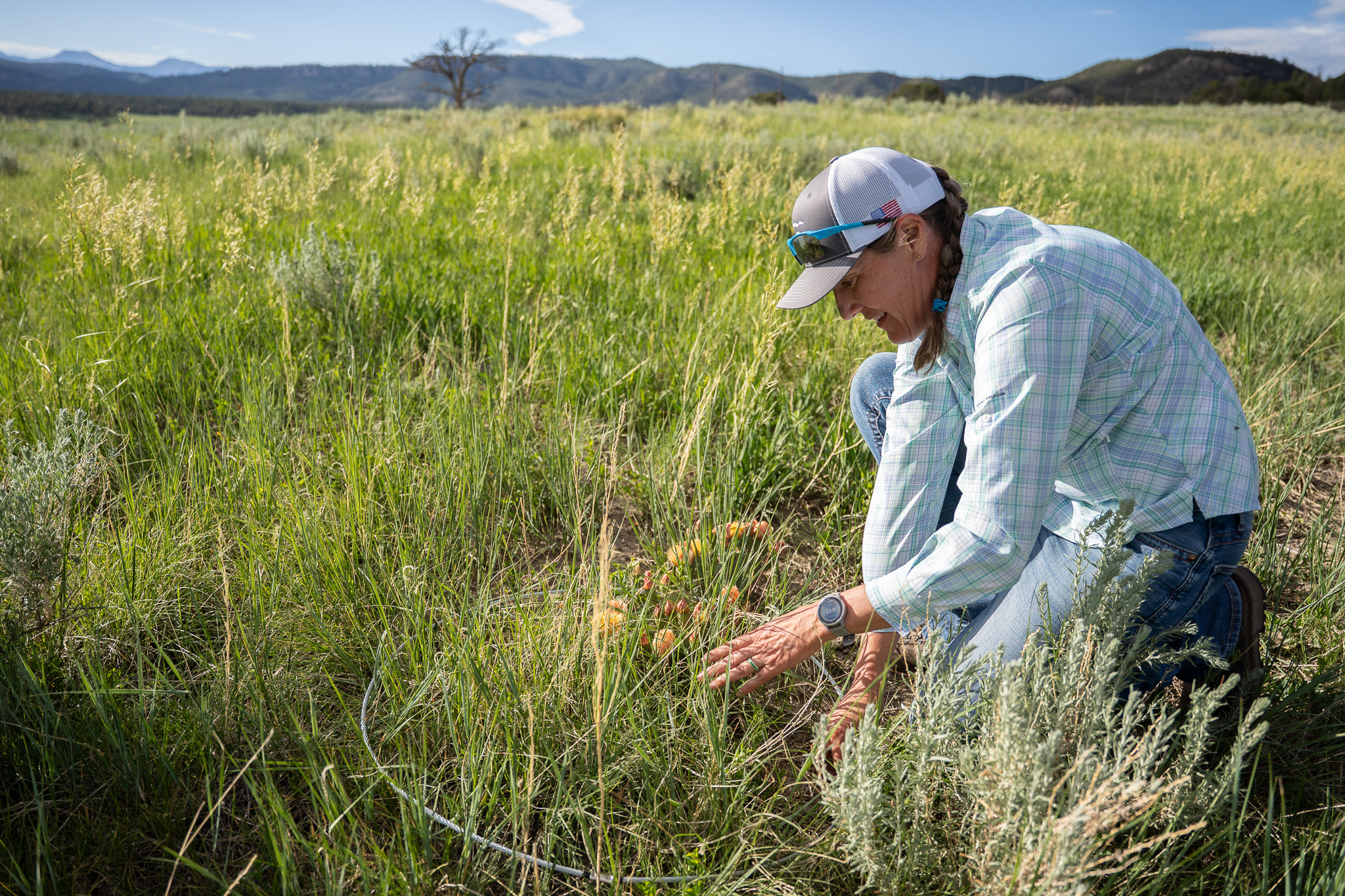
Sara Holm is a Geologist and Geographic Information Systems (GIS) Specialist. She has worked at Vermejo for 17 years.